How to Wrap a Necklace Without a Box: 3 Gift-Wrapping Methods
To wrap a necklace without a box, give the chain a firm backing first, then add a soft protective layer and an outer paper wrap or pouch. Folding paper directly around a loose necklace can leave the chain moving freely inside.
As a jewellery team, we want the unwrapping to feel thoughtful without sacrificing the piece inside. Below are three ways to present a necklace when you do not have its original box. The illustrations show presentation layouts; choose packaging that supports the shape of your necklace. For a fragile, heavy or valuable piece, a suitable jewellery box is the better starting point.
Choose the method for the necklace and the journey
| Method | Useful when | What you need | Limitation |
|---|---|---|---|
| Backing card + pouch | You will hand over the gift | Clean card, soft pouch, plain tissue | A pouch alone gives limited impact protection |
| Soft inner parcel + paper envelope | The necklace is flat and delicate | Card, tissue, paper, adhesive for outer paper only | Keep flat; not suitable for an unprotected postal journey |
| Rigid reused container | The piece needs more protection | Clean rigid container, card, soft padding, wrapping paper | The container must fit without pressing on the jewellery |
Prepare a clean backing card
Use smooth, sturdy card that is wider than the necklace's pendant or nameplate. Round off rough corners. Lay the necklace on top to check that no part will protrude. A short chain and a wide nameplate may need a different arrangement from a long pendant necklace; do not bend a nameplate to fit a small card.
If the card can take two shallow slits at the top edge without tearing, make them with scissors before putting the jewellery on it. The openings should hold the upper chain lightly, not pinch or scrape it. Avoid tight holes that require dragging the clasp or pendant through. If the card feels rough, skip the slits and use a suitable jewellery pouch or a proper presentation insert instead.
Fasten the clasp, arrange the pendant on the front and place the spare chain loosely behind the card. Cover that spare chain with a small fold of plain tissue. Never put adhesive directly on the chain, clasp, stones or pendant. Do not pull the chain taut to make the display look straighter.
Method 1: a backing card inside a soft pouch
- Prepare the card and arrange the necklace without tension.
- Fold plain, clean tissue loosely around the card, keeping the necklace in position.
- Slide the covered card into a clean pouch large enough to take it flat.
- Close the pouch without catching the chain in its drawstring or fastening.
- Add a handwritten gift tag to the outside.
This is a simple hand-delivered option. Keep it separate from keys, other jewellery and heavier gifts. If the necklace slips off the card or the pouch presses on the pendant, choose a different size or a rigid container.
Method 2: a flat paper envelope with a protected inner parcel
- Place the backed necklace inside a loose tissue wrap.
- Fold a second piece of clean card over it like a book, leaving room around raised details.
- Wrap that inner parcel in paper, closing only the paper edges with tape.
- Place it inside a paper envelope that fits without bending.
- Mark the presentation envelope with the recipient's name and hand it over flat.
Do not press the parcel under a stack of gifts. If a stone setting or dimensional pendant would bear pressure between the card layers, this flat method is unsuitable. Use a rigid container with clearance around the piece instead.
Method 3: reuse a clean, rigid container
A small rigid gift container can replace the original box if its interior is clean, dry and free from strong smells, rough edges and residues. Avoid food containers with lingering oils or odours. Line the base with soft, clean padding, then place the backed and tissue-covered necklace inside.
Check that the lid closes freely without touching the jewellery. Add enough soft support to limit movement, without tightly compressing the chain or pendant. Wrap the closed container and attach the gift tag. Do not use loose glitter or confetti inside; they make the recipient's first job a cleanup.
Check the parcel before adding the final ribbon
- The clasp is fastened and the chain is not pulled tight.
- The pendant and any stones have clearance rather than pressure on top.
- No adhesive touches the jewellery.
- There are no sharp staples, pins or rough cut edges near the piece.
- The recipient can open the outer wrap without cutting close to the necklace.
Gift wrapping is not shipping packaging
A paper envelope or drawstring pouch is a presentation layer, not adequate postal protection on its own. For shipping, use a suitable protective inner container inside a sturdy outer parcel with cushioning. Follow your carrier's packaging guidance and service restrictions; do not send a necklace loose in a greeting-card envelope.
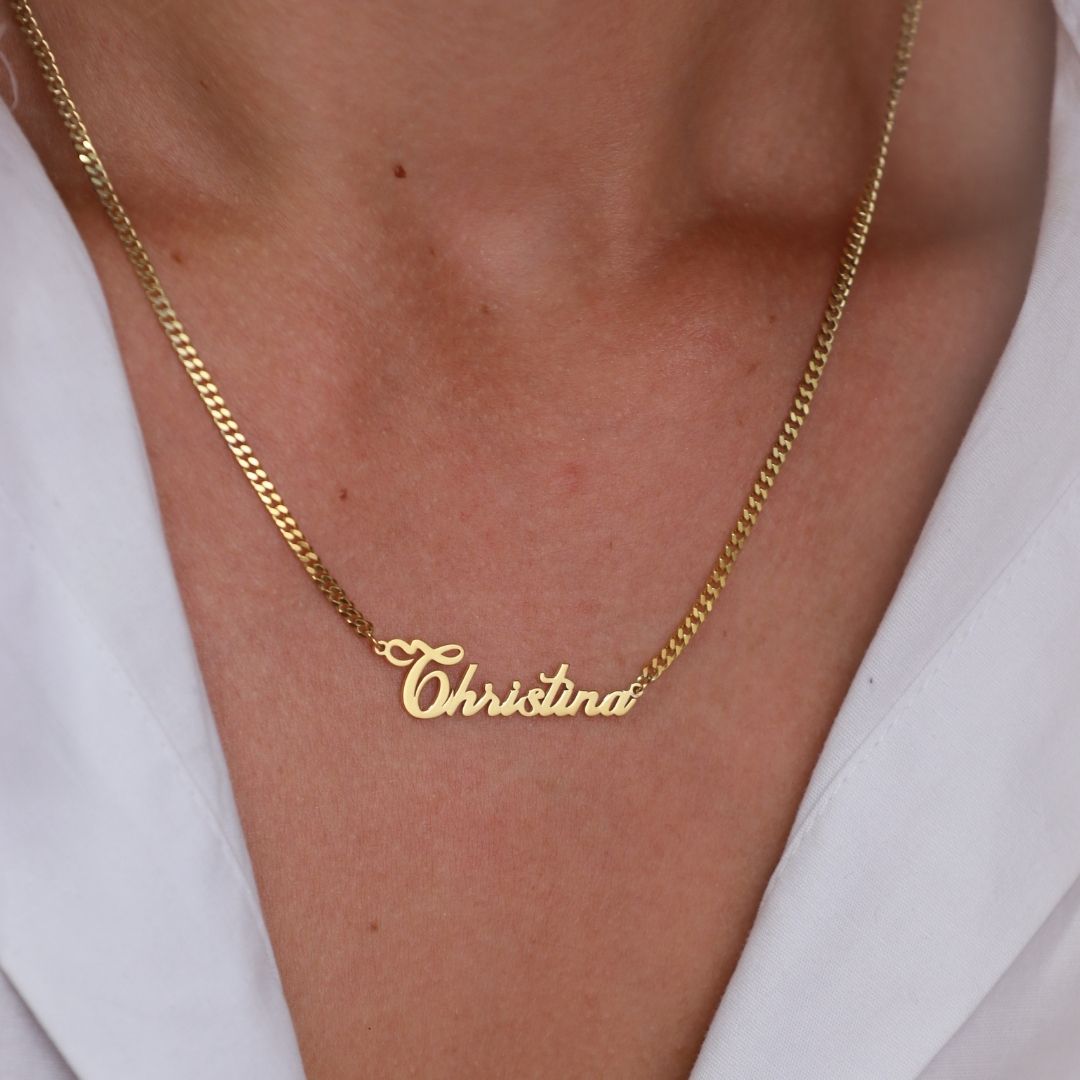
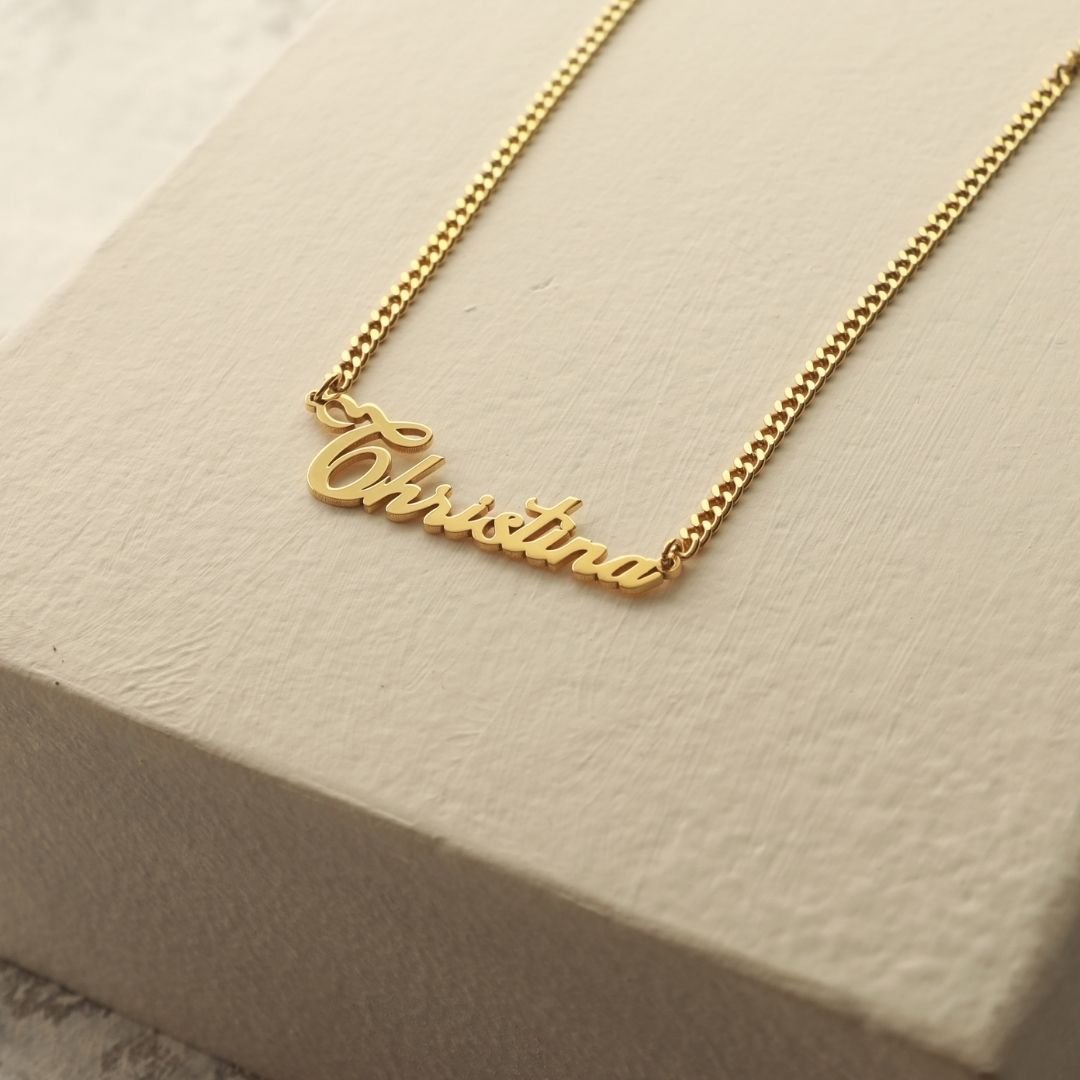
If you are still choosing the gift, our custom name necklace guide covers styles and fit. After the gift is opened, our jewellery storage guide offers a starting point for keeping pieces organised.
Necklace wrapping FAQs
Can I wrap a necklace in tissue paper only?
Tissue can make a soft inner layer, but it does not provide a firm backing or impact protection. Add appropriate support and an outer presentation layer; use a protective container for transport.
Can I tape the chain to the card?
Avoid adhesive directly on jewellery. Use a suitable insert or gentle card arrangement, and tape only the outer paper away from the piece.
What if I do not have a suitable card or pouch?
Wait until you can obtain suitable packaging rather than forcing the piece into an improvised tight parcel. A simple clean jewellery box is preferable to an elaborate wrap that presses on the necklace.
The useful finishing touch: add a short note explaining the name, initial or memory behind the necklace. It gives the recipient something meaningful to discover alongside the gift.